Tree Removal FAQ — St. Peters, Missouri
Straight answers to the questions St. Peters homeowners ask most about tree removal, trimming, and storm cleanup on a suburban lot. If your situation is urgent, skip ahead and reach out — a leaning or cracked tree only gets more dangerous while you wait.
How much does tree removal cost in St. Peters?
It typically comes down to size, condition, and access. A small tree in the 20 to 30 foot range with clear access can typically run a few hundred dollars. A large, mature tree in the 60 to 80 foot range — the size of a lot of St. Peters' original subdivision shade trees — typically lands in the four figures once rigging, a crane, or tight backyard access gets involved. Dead or leaning trees near a house typically cost more than a healthy tree in an open side yard, because the crew has to work slower and more carefully around what's nearby. We give real numbers after seeing the actual tree, not before.
Can you remove a tree that's leaning over a fence or hanging above a pool?
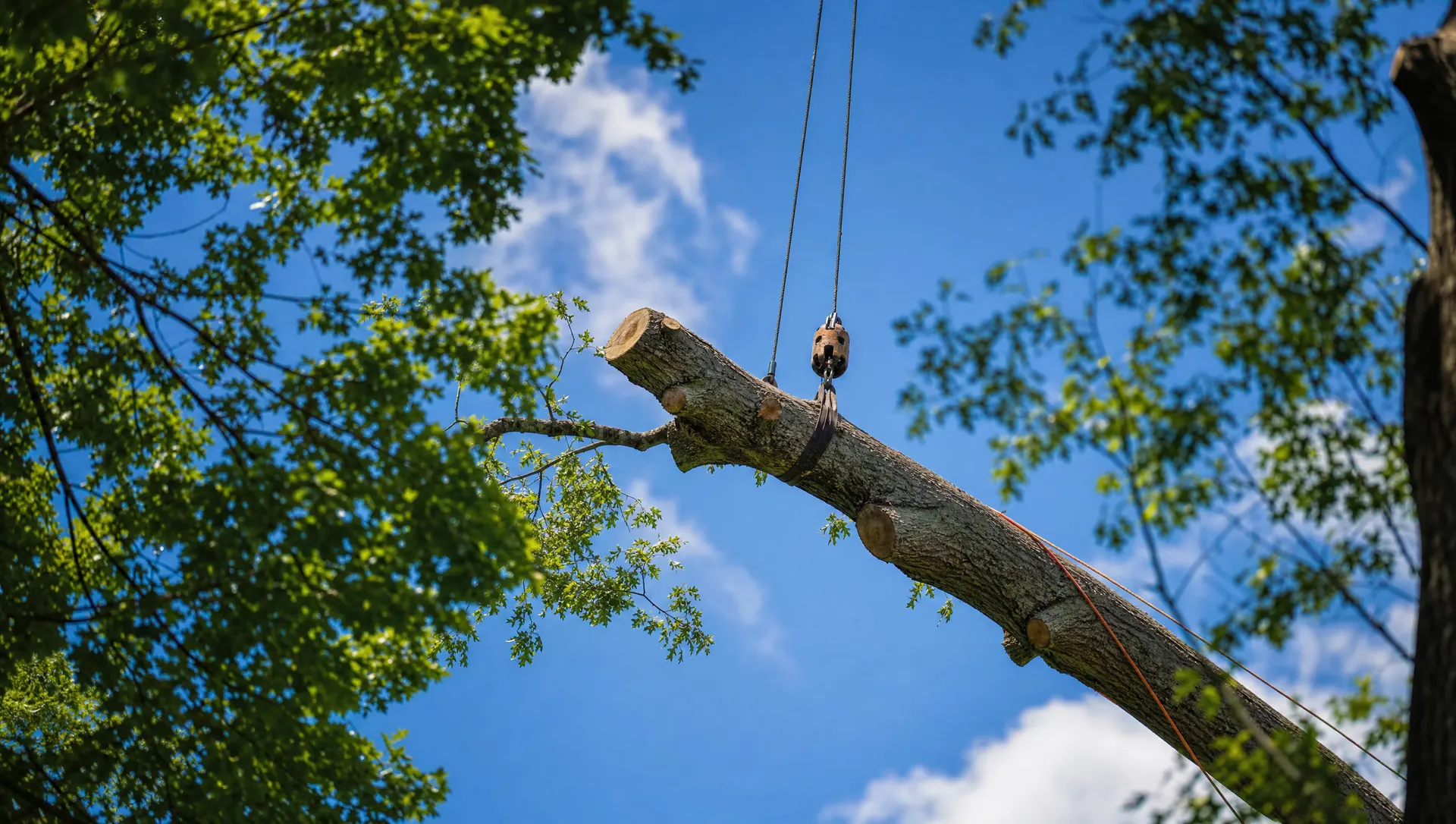
Yes, and it's one of the more common calls in St. Peters. Trees leaning toward a fence or positioned over a pool get taken down in sections — roped and lowered piece by piece instead of felled in one direction — specifically so the fence stays standing and the pool, liner, and deck stay clear of falling wood. Tell us where the fence and pool are relative to the tree when you reach out, since that shapes how the crew plans the takedown before anyone climbs it.
Will homeowners insurance cover a tree that falls on my house?
In most cases, yes, when the cause is a covered peril like wind or a storm — most homeowners policies cover the cost of removing a tree that damages a covered structure, along with repairs to the structure itself. Where it gets more complicated is a tree that was already dead, damaged, or leaning before it fell; an insurer can push back if the tree's condition suggests it should have been dealt with sooner. Photograph the tree and the damage before anything gets cleared, and check the specifics of your own policy — coverage details vary and it's worth a call to your agent.
Who owns a tree growing on the property line between two houses?
Generally, if a tree's trunk sits entirely on one side of the line, that owner owns it. If the trunk actually straddles the boundary, it's typically treated as owned jointly by both neighbors, which usually means both sides should agree before it comes down. A quick look at the survey pins or plat map settles most disputes about exactly where the line falls. When a boundary tree is involved, it's worth a short conversation with the neighbor before work starts — it keeps the job simple and keeps the relationship intact.
How deep do you grind a stump?
A standard grind typically goes 4 to 6 inches below grade, which is enough to mow over and cover with soil and seed. If you're planning to replant in the same spot, put in a paver patio, or run new sod over the area, a deeper grind — typically 10 to 12 inches or more — clears more of the root flare and gives new roots or hardscape base room to work with. Mention what you're planning for the spot afterward so the grind depth matches the plan instead of having to redo it later.
Can I replant a tree in the same spot after removal?
Usually, once the stump and the bulk of the major roots are ground out. The main things that affect it: how deep the grind went, how much of the old root system is still decomposing underground, and whether the same spot even makes sense for a new tree — a lot of St. Peters' original subdivision trees were planted too close to the house or the driveway in the first place. If a replant is the plan, it's worth deciding on species and placement before the grinding happens so the crew can leave the right amount of clearance.
Will you trim branches that are touching a power line?
No — and no tree service should. Line clearance on live power lines is handled by the utility, not by a private tree crew, because of the equipment, training, and safety protocols involved in working near energized lines. In the St. Peters area that's Ameren. If a branch or a whole tree is in contact with a line, the right move is to keep everyone and everything clear of it and contact Ameren directly. We handle everything else on the tree — the parts not touching the line — once the utility side is addressed.
Does my HOA need to approve tree removal?
Check your HOA's covenants before removal, especially for front-yard trees, anything near a common area, or a subdivision with specific landscaping rules. Some St. Peters HOAs require notice or approval before a tree comes down, particularly if it's visible from the street; others only care about what happens afterward — whether the stump gets ground and the yard gets leveled and reseeded in a reasonable stretch of time. When in doubt, a quick email to the HOA before the crew shows up saves a headache later.
Do I need a permit to remove a tree in St. Peters?
It depends on the tree and where it sits. Some municipalities in St. Charles County have rules around trees in the public right-of-way, on easements, or specific protected or heritage trees, while removing a tree entirely on private property away from the street is often no different than any other yard project. Because rules vary and change, it's worth a quick check with St. Peters city hall before removing a large or prominently placed tree — a five-minute call beats finding out afterward that a limb or root was in an easement.
How do I know if a tree needs to come down instead of just being trimmed?
A few signs point toward removal rather than trimming: a lean that's gotten noticeably worse, a split or crack running down the trunk, a large area of dead canopy with no new growth, fungus growing at the base, or root damage from construction or heavy grading nearby. A tree that's simply gotten too big, too tall, or too close to the house — without any of those hazard signs — is often a trim-first conversation instead. If you're not sure which category a tree falls into, describe what you're seeing and we'll help sort out whether it's a trim or a removal.
What happens to the wood and brush after a tree comes down?
Standard practice is hauling it off the property — trunk sections, limbs, and the brush from any trimming get cut down, loaded out, and the yard gets cleaned up behind them. If you want firewood-length rounds left behind or brush chipped into mulch you can keep, just say so before the work starts; it changes how the crew stages the job. Left to their own plan, most crews haul everything and leave the yard clear.
What should I do first if a storm-damaged tree is leaning on my house or touching a line?
Get everyone clear of the area first — leaning trees and cracked limbs can come down with no warning, and a tree in contact with a power line turns the whole area electrically live. If a line is involved, contact Ameren before anything else; don't try to move the tree, the limb, or anything touching it yourself. Once the area is safe and any line issue is being handled, photograph the damage for your insurance record and reach out so a crew can plan the cleanup.
How much room do you need to get equipment to a backyard tree?
Less than people expect, but it's worth mentioning gate widths and access when you reach out. A lot of St. Peters backyards are only reachable through a side yard gate or between two houses, which usually means smaller equipment, more rope work, and hand-carrying debris back out rather than driving a truck to the tree. It's slower than a job with street access, but it's routine work for a crew that handles subdivision lots regularly — just flag the access situation up front so the right equipment gets sent.
When is the best time of year to remove or trim a tree?
Late fall through winter, while trees are dormant and bare, is generally the easiest season for both removal and trimming — better visibility into the branch structure, less stress on the tree if only part of it is coming out, and typically softer impact on the surrounding lawn since the grass isn't actively growing. That said, a hazardous tree or storm damage doesn't wait for the ideal season. Anything urgent gets handled when it happens; routine trimming and non-urgent removals are the jobs where timing it for the dormant season makes the most sense.
Get a Free Quote
If you have a tree, stump, or storm damage question that isn't answered here, or you're ready to get a crew out to look at it, tell us what's going on and we'll take it from there.
Need Help in St. Peters Right Now?
Tell us what you need and we'll get back to you fast with a free, no-pressure quote.