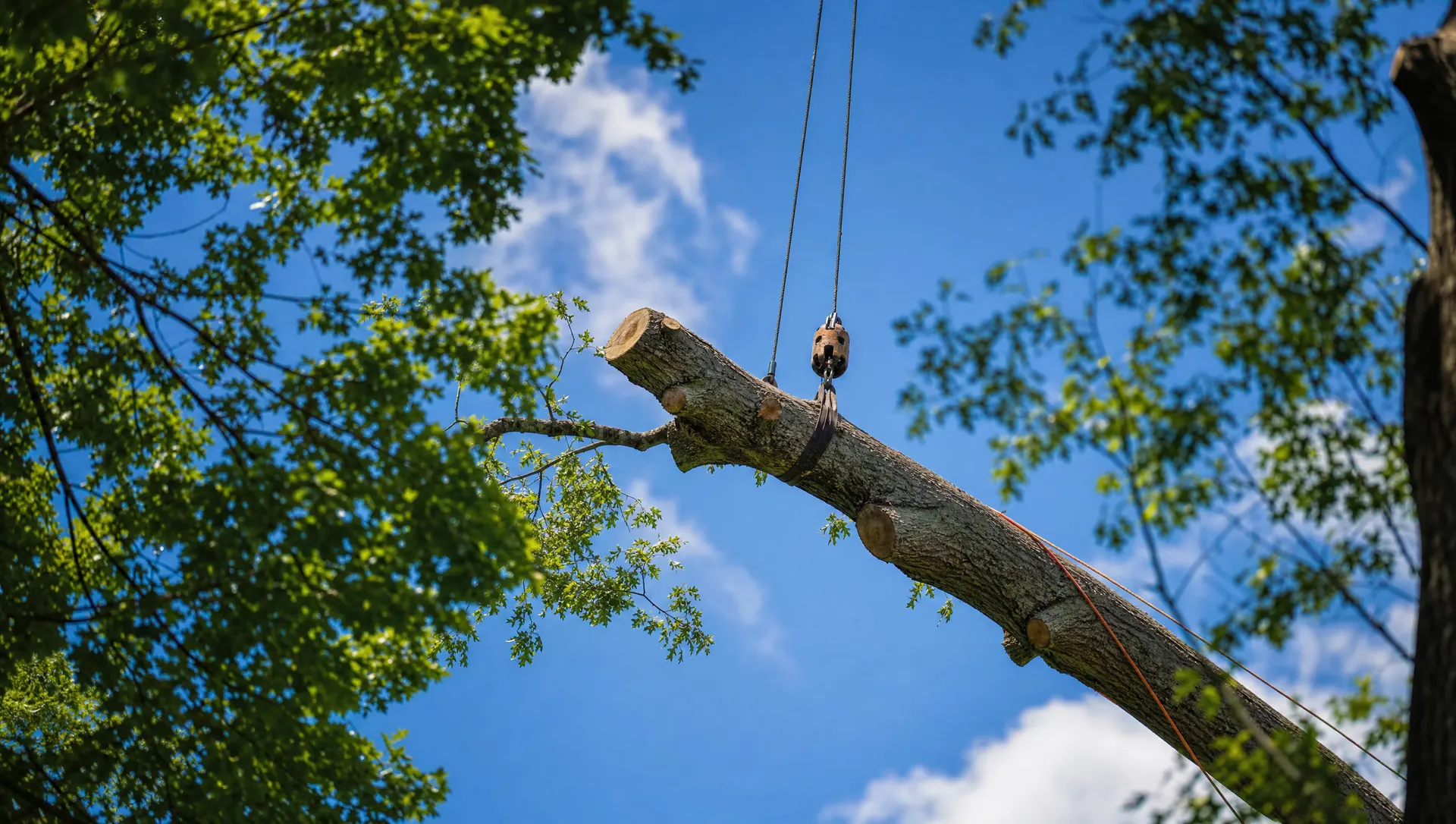
Tree Trimming & Pruning in St. Peters, Missouri
Not every tree problem in St. Peters ends in removal. A lot of them end with a chainsaw taking off exactly the right limbs and leaving the rest of the tree standing — deadwood cleared out of the canopy, branches pulled back off the roofline, or a crown thinned so wind moves through it instead of leaning the whole tree over in the next storm. St. Peters Tree Removal connects homeowners with local crews for tree trimming and pruning across St. Peters and St. Charles County.
Tell us what the tree is doing — scraping the roof, blocking a window, dropping deadwood, or just looking overgrown — and we'll get that in front of a crew that can tell you honestly whether trimming solves it.
What's Included in Tree Trimming & Pruning
Depending on the tree and the goal, trimming covers:
- Deadwooding — removing dead, dying, or broken branches from the canopy before they fall on their own
- Crown thinning — selectively removing interior branches so wind and light pass through more evenly, reducing strain on the whole tree
- Clearance pruning — cutting back limbs that are contacting or overhanging a roof, gutters, siding, or a structure
- Structural pruning on younger trees — shaping growth early so a tree develops a stronger form instead of needing major correction later
- Crown raising — removing lower limbs for clearance over a driveway, walkway, or fence line
- View and light management — opening up a canopy that's shading out grass underneath or blocking a window without taking the tree out entirely
Every cut is made back to a proper branch collar or lateral, not just hacked off partway down a limb — the difference matters for how well the tree seals the wound and how it grows back afterward.
Why Trimming Matters on a Tight Lot
Because so much of St. Peters was planted out at the same time, entire streets are lined with trees that hit the same growth stage together — the same silver maples and pin oaks reaching over rooflines within a year or two of each other, all up and down the block. Regular trimming on that kind of schedule is less about any one tree being a problem and more about staying ahead of the canopy before it's resting on the shingles or blocking a window that used to have a view.
Clearance matters more on a tight lot, too. A branch that would just brush past open space on a rural property is scraping siding or hanging over a neighbor's driveway here. Pulling limbs back a reasonable distance from the roofline, gutters, and any structure keeps the tree healthy and keeps it from becoming a maintenance problem for the house underneath it.
When to Call for Trimming vs Removal
Trimming is usually the right call when a tree is otherwise healthy but has dead wood, is contacting a structure, or has gotten dense and top-heavy. Removal becomes the more honest recommendation when a tree has a worsening structural lean, a split trunk, major root damage, or so much dead canopy that trimming would take out most of the tree anyway. If you describe the tree's condition — not just what's bothering you about it, but what shape it's actually in — we can help sort out which category it falls into before a crew ever shows up.
What Tree Trimming Typically Costs
A few things typically drive the price of a trim job:
- Tree size — a young ornamental tree costs far less to trim than a mature 60-foot shade tree
- Scope — light deadwooding costs less than a full crown thin or structural prune
- Access and height — trees requiring climbing gear or a lift, versus what's reachable from the ground, cost more
- Number of trees — trimming several trees on one visit typically costs less per tree than separate trips
Routine trims on smaller trees typically run in the low hundreds; larger, more involved crown work on mature shade trees typically costs more. We give a firm number after seeing the actual tree.
Questions About Tree Trimming
Do you trim branches that are touching a power line?
No — line clearance on energized power lines is handled by the utility, which in the St. Peters area is Ameren, not by a private tree crew. If a branch is contacting a line, that gets reported to Ameren directly. We can trim everything else on the tree that isn't touching the line.
How often should trees actually be trimmed?
It depends on the species and the tree's situation more than a fixed schedule. A young tree benefits from structural pruning every couple of years while it's establishing its shape. A mature tree near a house is usually more about periodic deadwooding and clearance as needed — when limbs start reaching the roof or dead wood starts showing up in the canopy — rather than trimming on a strict calendar.
Can trimming fix a tree that leans toward my house?
Sometimes, if the lean is mild and the goal is reducing weight and wind resistance on the leaning side through selective thinning. A significant structural lean, though, usually comes from root or trunk issues that trimming the canopy doesn't fix — in that case, trimming can reduce risk somewhat but removal is usually the more honest long-term answer.
Does trimming hurt the tree?
Done correctly, no — a tree can typically lose a reasonable portion of its live canopy in a season without lasting harm, especially when cuts are made at proper branch collars instead of stubbed off mid-limb. What does hurt a tree is over-trimming, sometimes called topping — cutting main limbs back to stubs rather than a lateral branch — which can trigger weak regrowth and long-term decline. A trim plan built around removing what actually needs to go, not an arbitrary percentage of the canopy, keeps the tree healthier in the years after.
Get a Free Quote
If a tree needs attention but you're not sure whether it's a trim or something bigger, tell us what you're seeing and we'll help figure it out.
Need Help in St. Peters Right Now?
Tell us what you need and we'll get back to you fast with a free, no-pressure quote.